


The D-Bar Clubfoot Brace

Easy to set external rotation with just a turn of a screw
Bored Screw Inserts will keep everything snug but not over tight
Ergonomic curve makes holding your child much easier while wearing the bar
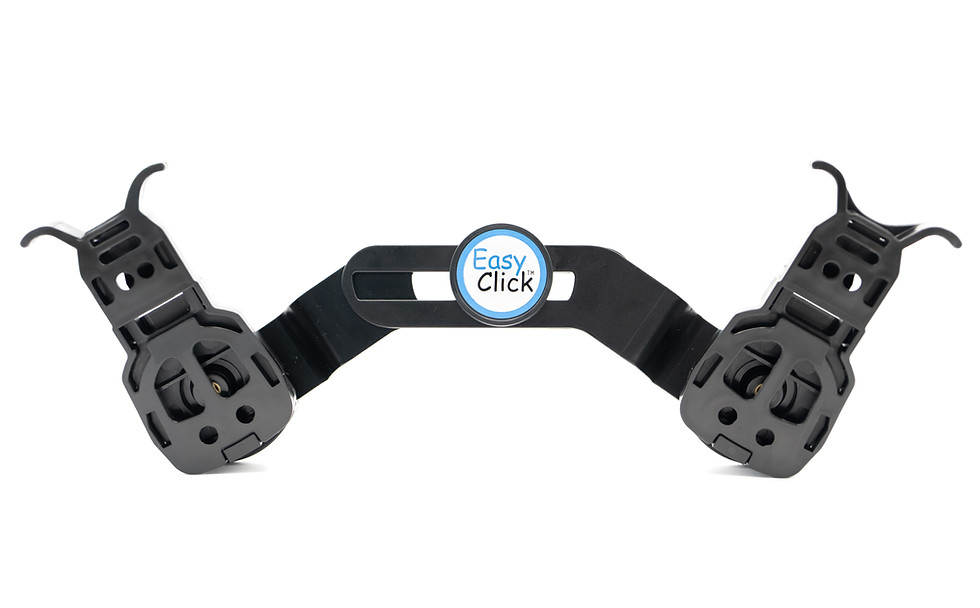
Quick Release Shoe Plate for Iowa AFOs
Trademarked EasyClick Logo
Aircraft Grade Aluminum Bar
Quick Release Tab for easy disconnect of the AFO's
EasyClick-IA
Key Features
Dobbs Quick Release
Quick Release mechanism allows Iowa AFO's to click on and off for diapering, car seats, and high chairs.
Adjustable External Rotation
Easy to set external rotation dial with just a turn of a screw. We have provided 10 degree increments of external rotation.
Adjustable Bar Width
Your brace will adjust in length as the child grows, with a turn of a screw.
Sizes: Small 6-9 inches
Regular 9-14 inches
Universal Screws
Universal hex drive screws make the brace easy to adjust, and will keep everything snug.
More Information
Setting Up EasyClick-IA
-
Setting the bar width. The brace should be set so that the width of the bar is equal to the shoulder width of the child. Measure the shoulder width of the child from the left outside shoulder to the right outside shoulder. Adjust the length of the brace so that the length is equal to the shoulder width measurement from mid-heel of the left footplate to mid-heel of the right foot plate. Using the included hex key, loosen the hex drive screw(s) on the center clamp and slide the width of the bars open until they match the shoulder width of the child. Once the width is correct, retighten the hex drive screw(s) to lock the bars firmly in place.
-
Setting external rotation. The clubfoot should be set at about 60 degrees of external rotation, which should match the degree of rotation of the foot in the last cast. If the foot was externally rotated only 50 degrees in the last cast the brace should also be at 50 degrees. A normal, non-affected foot should be fixed on the bar in about 30-40 degrees of external rotation.
-
Attaching the foot plate. Attach the black foot plate to the bottom of the Iowa AFO's by lining up the countersunk holes in the black foot plate with the holes on the bottom of the AFO's. Using the hex drive screws provided, first tighten one screw halfway, then tighten the other screw(s) completely. Then go back and tighten the first screw all the way.
-
Using the quick disconnect feature. Once the foot plate is attached to the AFO's, slide the black clip located on the brace into the back of the shoe plate. Once you hear a "click" you will know the AFO is securely attached to the brace.
Instructions for Use
-
The brace should be worn 23 hours a day for the first 3 months and then at nighttime and naps.
-
Bracing is critical in maintaining the correction of clubfeet. If the brace is not worn as prescribed, there is a near 100 percent recurrence rate.
Advice to Parents
-
Play with your child in the brace. Babies might get fussy for the first few days after receiving a brace, and will require time to adjust. Playing with your child is the key to getting over the irritability quickly. Teach your child that he/ she can kick and swing the legs with the brace on by gently moving your child's legs up and down together and independently until he/she gets used to the brace.
-
Make it routine. Children do better if you develop a fixed routine for brace wear. During the three to four years of night/naptime wear, put the brace on anytime your child goes to the “sleeping spot.” They will figure out that when it is “that time of day” they need to wear the brace. Your child is less likely to fuss if this is a constant routine.
-
Pad the bar. By padding the bar you will protect yourself and your furniture from the metal bar when the child is wearing the brace.
-
Check your child's feet. It is important to check your child's feet several times a day after initiating the bracing to ensure no blisters are developing on the heel. Never use lotion on any red spots on the skin (lotion will make the problem worse). Some redness is normal with use. Bright red spots or blisters, especially on the back of the heel, usually indicate that the heel is slipping. Ensure that the heel stays down in the shoe by securing the straps and/ or buckles or by talking to your orthotist about placing a heel pad in the shoe.
-
Always wear cotton socks. Your child should always wear cotton socks under his/ her shoes, sandals or plastic AFO's. The sock should be a little higher than the top of the shoes, sandals or orthosis. Allow your child's toes some freedom.